Parenting adolescents is one of the most rewarding—and at times, most challenging—relationships we'll ever navigate.
When communication breaks down or conflict becomes a recurring pattern, it can leave both parents and teens feeling frustrated, misunderstood, and stuck.
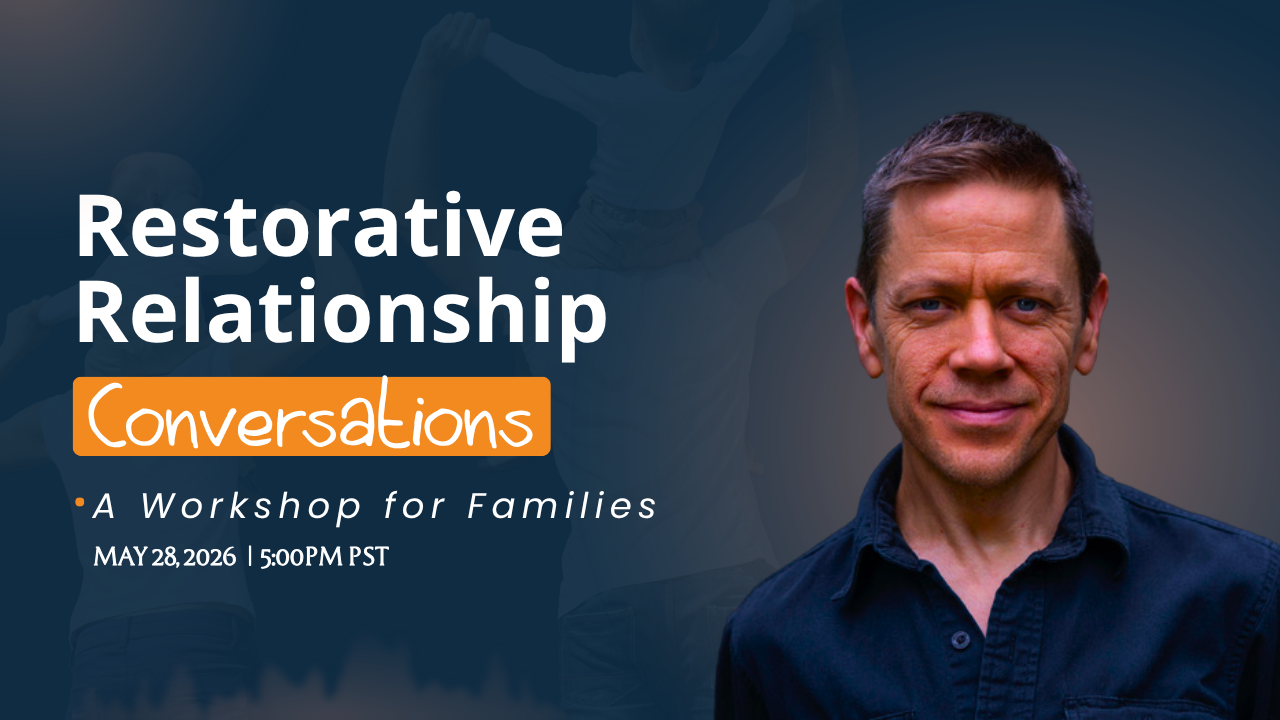
This recorded workshop introduces the Restorative Relationship Conversations (RRC) model, a practical, structured approach to transforming conflict into deeper understanding and connection.
Through a guided slideshow presentation and open Q&A, you'll be introduced to the core framework of RRC, a process-oriented model designed to help families identify the patterns that fuel conflict, interrupt them at the root, and build collaborative pathways forward. Unlike traditional therapeutic approaches, RRC is grounded in practical application: real skills and clear guidelines you can begin using in your own family conversations right away.
*This is a previously recorded session*
In this workshop, you'll explore how the RRC process can help you:
- Address the underlying roots of conflict that keep you stuck in difficult communication dynamics
- Remove the obstacles that get in the way of relating in healthy, fulfilling ways
- Create new communication patterns that lead to more emotional safety, trust and connection
ACCESS HERE!
Whether you're navigating day-to-day friction or longer-standing relational challenges, the RRC model meets you where you are. No prior experience with therapy or conflict resolution is required—just a willingness to show up and engage.
If you're tired of feeling stuck in the same cycles and ready to handle conflict with greater confidence and grace, this workshop is for you.
ACCESS HERE
What is this workshop about?
Who is this workshop for?
What will I actually learn?
What can I expect to leave with?
When is the workshop happening?
Biography:
David Cooley’s path to developing the Restorative Relationship Conversation model began in the field of Restorative Justice, where he worked as a professional Restorative Circle facilitator and trainer. In this role, he supported individuals in resolving interpersonal conflict through dialogue and repair rather than adversarial systems.
His work was informed by training in trauma-informed care for victims of crime, cultural and gender sensitivity, Nonviolent Communication, and cultural brokering. After leaving the Restorative Justice field, David was inspired to re-imagine the restorative conflict model as a practical tool for intimate relationships. Drawing on additional training in mindfulness-based practices, narrative therapy, somatic work, Internal Family Systems and attachment theory, he developed a process that helps people engage conflict in healthier, more connected ways.
Today, Dave offers the Restorative Relationship Conversation process to private clients seeking to transform conflict into deeper understanding, connection, and intimacy.